
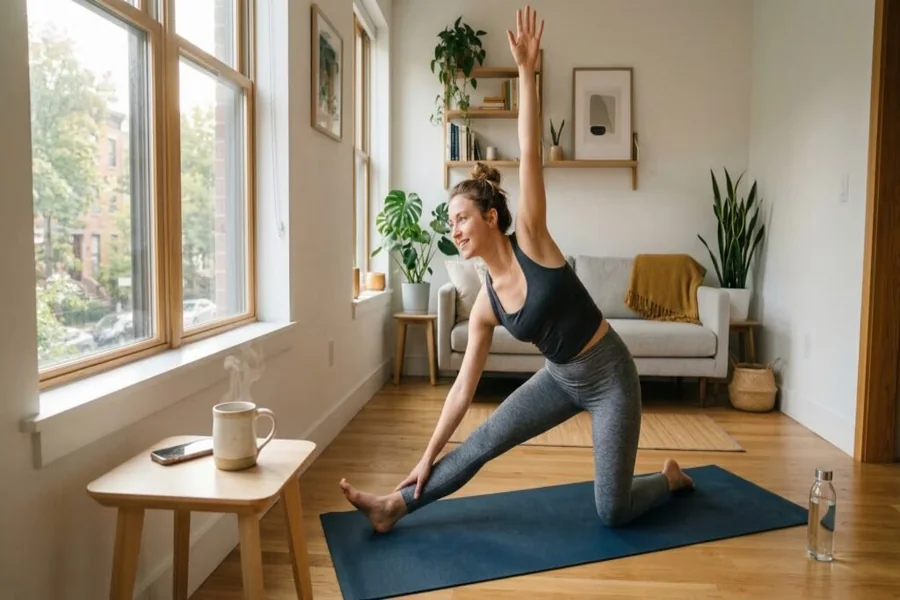
When work, family, meetings, and daily activities occupy your time, finding time to exercise may be challenging. A number of people think that in order to stay active, they must exercise for an hour a day. Actually, there are little things that could be significant all day long.
Simple exercise habits for busy people are aimed at making exercise easier in the daily life. Special equipment, or complicated workout routines are not always required. Get more active in a variety of ways, such as by walking more, taking more breaks to stretch in between tasks, taking the stairs instead of the elevator, and doing brief workouts.
The important thing is to keep going. Short bursts of activity that are performed regularly could be more sustainable than longer sessions occasionally.
The importance of exercising in a hectic lifestyle.The role of exercise in a busy life
These days, it is common to have a hectic life, which includes extended periods of sitting. Companies may have people sitting hours at their desks and at home may have people sitting even less as they do not have to commute.
Frequent exercise helps in various aspects of health. Physical activity can help keep muscles strong, the body fit, mobile and working well. It can also be a good way to take a break from a mental challenge.
The key is to find a routine that’s going to fit your schedule, not against it.
If you’re looking for a free hour, try to find shorter opportunities during the day to get some exercise.
Short and easy exercise routines for busy people
An active lifestyle doesn’t have to be a complete lifestyle change. You can build up more movement by making some small changes.
Set up a quick morning exercise routine.Get in a quick workout in the morning.
Don’t have to exercise in the morning for a long period. Just 5-10 minutes of activity can get you active and going for the day.
One morning routine could be:
- Bodyweight squats
- Gentle stretching
- Lunges
- Push-ups
- Arm circles
- Walking in place
- Find exercises that are suitable to your fitness level.
- Also, you can help with morning exercise so that the unforeseen tasks you may have later in the day will not be a factor.
- To take short walking breaks.
Walking is one of the easiest methods to incorporate physical activity into a hectic day.
Take breaks and stand up to stand around for several minutes every hour or two if you work at a desk. This could involve walking around the office, briefly outside, or moving around at home.
Walking a few steps can add up throughout the day
For instance, three 10 minute walks will give 30 minutes of movement, but no one big block of free time.
In cases where feasible, use stairs instead of elevators or escalators
Little items can make a difference in being active without needing a formal exercise session.
A simple one is to walk up and down the stairs rather than use the elevator. When climbing stairs, several muscles in the legs are exercised and movement is increased during normal activities.
There’s no need to stay away from elevators altogether. Taking the stairs from time to time can help get more activity.
Take breaks to work out
Reading emails while on the break is not the only way to work.
Take some of your break for activity.
- You might complete:
- 10 squats
- 10 wall push-ups
- A few stretches
- A short walk
- Gentle shoulder movements
These exercises can be completed in just a few minutes.
If you work from home, you might even have greater freedom to integrate brief movement breaks in between work tasks.
Encourage the use of movement to enhance everyday activities.Use movement to enhance everyday activities
Exercise doesn’t have to be traditional exercise.
There are many activities in everyday life that require movement.
House cleaning, gardening, shopping for groceries, walking the dog, and playing with the kids are all activities that can help you maintain an active lifestyle.
Small opportunities for movement also can be created.
Stand at a distance from an entrance to a store. Talk on the phone and walk. Stand while reading emails. After lunch, go for a walk.
These are little habits that can add up to make a difference in your overall activity.
Try Short Home Workouts
For those with busy schedules, home workouts can be helpful as there is no travel time.
A simple exercise program can be done with body weight.
For example:
- 10 squats
- 10 wall or regular push ups.
- 10 lunges
- 20 seconds of in place marching
- The stretching is done in a brief session.
- Repeat the routine if you have additional time.
Newcomers should begin gently, rather than attempt to do a lot of activity.Once you are fitter you may be able to build up repetitions or the length of time.
Make exercise a priority and plan it out like any other appointment.
The busy person is busy and schedules meetings, deadlines, errands and appointments. The same can be said for exercise.
Set a realistic time and add to your schedule.
It could be:
- 15 minutes before breakfast
- A walk during lunch
- An exercise routine following work.
- After-dinner stroll
Making a plan for moving helps to minimize the decision-making that needs to be done on a regular basis.You must have some flexibility in your plan, though. Don’t despair if you miss a set, it is not the end of the world. Just resume to the regular timings if possible.
Exercise in combination with other tasks.
Exercise can be more easily sustained if it is paired with activities that you are already doing.
For instance, walk and talk on the phone or listen to a podcast when working out.
Another option is to stretch during TV shows, or do some body weight exercises while waiting for dinner.
These combinations enable you to move without establishing a new activity in your schedule.
Don’t do too much too soon.
A typical error is beginning an exercise program that is too intense.
An inactivity period of months may be followed by a period of intense daily exercise. This may cause pain, fatigue, frustration or injury.
Begin with small objectives.
Consider starting with 10 minutes of walking a day. Once this habit begins to become easier, start to increase the length of time.
When it comes to exercise, it’s better to build it slowly as it will be more sustainable.
Select Activities You Do Like.
Running and exercising in the gym are not necessary.
Staying active can be done in numerous ways.
You might enjoy:
- Walking
- Cycling
- Swimming
- Dancing
- Yoga
- Strength training
- Hiking
- Playing sports
The ideal exercise plan is one that you can follow regularly.
Activities that are fun will likely be more neglected during times of stress.
Avoid long, unbroken periods of sitting.Avoid prolonged sitting.
While exercise is important, getting a bit more active may be a benefit by cutting down on long periods of sitting.
Experiment with standing up throughout the day.
Set a reminder every hour to stand, stretch or walk around.
Workers with home offices can either walk around from room to room or go for brief walks outside during breaks in work sessions.
The movement breaks are not meant to be a substitute for structured physical activity, but they can help to reduce prolonged periods of sitting.
Keep Your Exercise Goals Realistic
Schedules are always in flux. It can be all or none for some days, 10 minutes for others.
The cue should be reflected in your exercise practice.
Rather than saying, “I have to do an hour of exercise,” try making a more lenient goal.
For example:
“I am going to get some exercise for at least 10 minutes now.”
If you have additional time, you can exercise longer.
It is often easier to keep a ‘realistic’ routine rather than a ‘perfect’ one.
Pay attention to a consistent pattern, rather than a perfect one
A missed workout is not the end of the world.
Sometimes your schedule may be interrupted by work deadlines, travel, family events, illness and other unforeseen requirements.
If you have to, try to persevere.
Consistency takes weeks and months.
Little tasks done over and over can become a part of your life.
Final Thoughts
There’s no need to be on schedule to be more active. Simple exercise habits for busy people is simply about finding exercise opportunities in everyday life.
Exercise during breaks, use stairs, do brief home exercises, stretch in between tasks, and plan exercise time when you can. Set achievable objectives and then build up.
The most important is developing a routine which fits your lifestyle. It’s important to take small steps that seem unimportant at the time, but can make exercise a normal, more permanent habit.
One Response